
Art
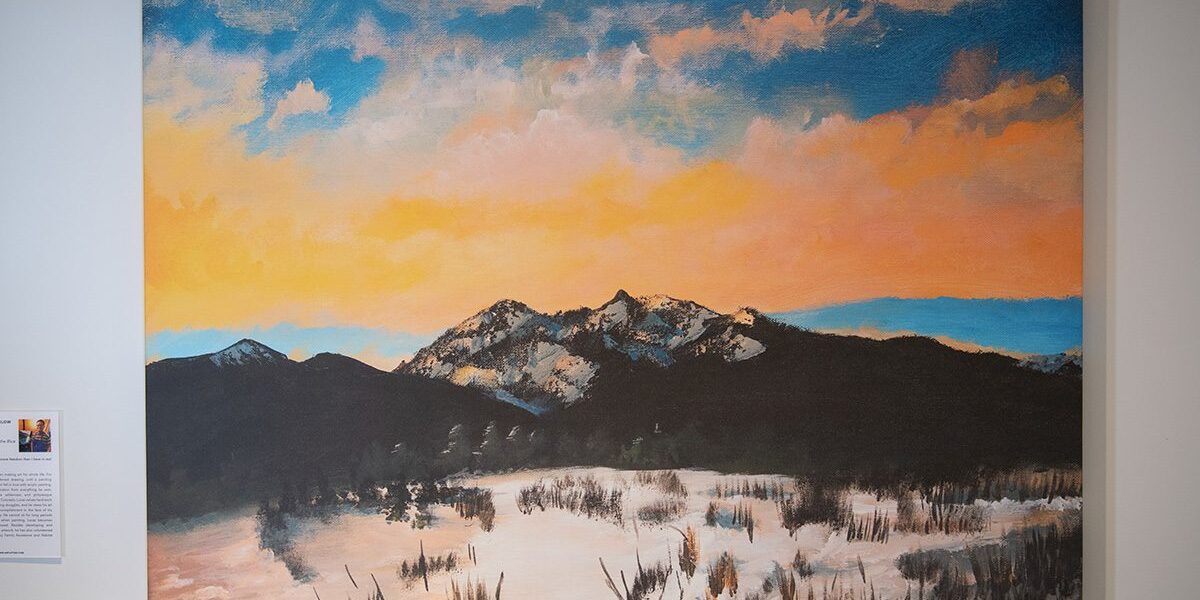
EGE is honored to feature ArtLifting’s artwork in the terminal. These rotating art exhibits introduce travelers to the creativity and stories of artists with disabilities, shedding light on this remarkable community and their talents, while providing direct support to the artists.

Embracing the Blue by Sierra Barnes
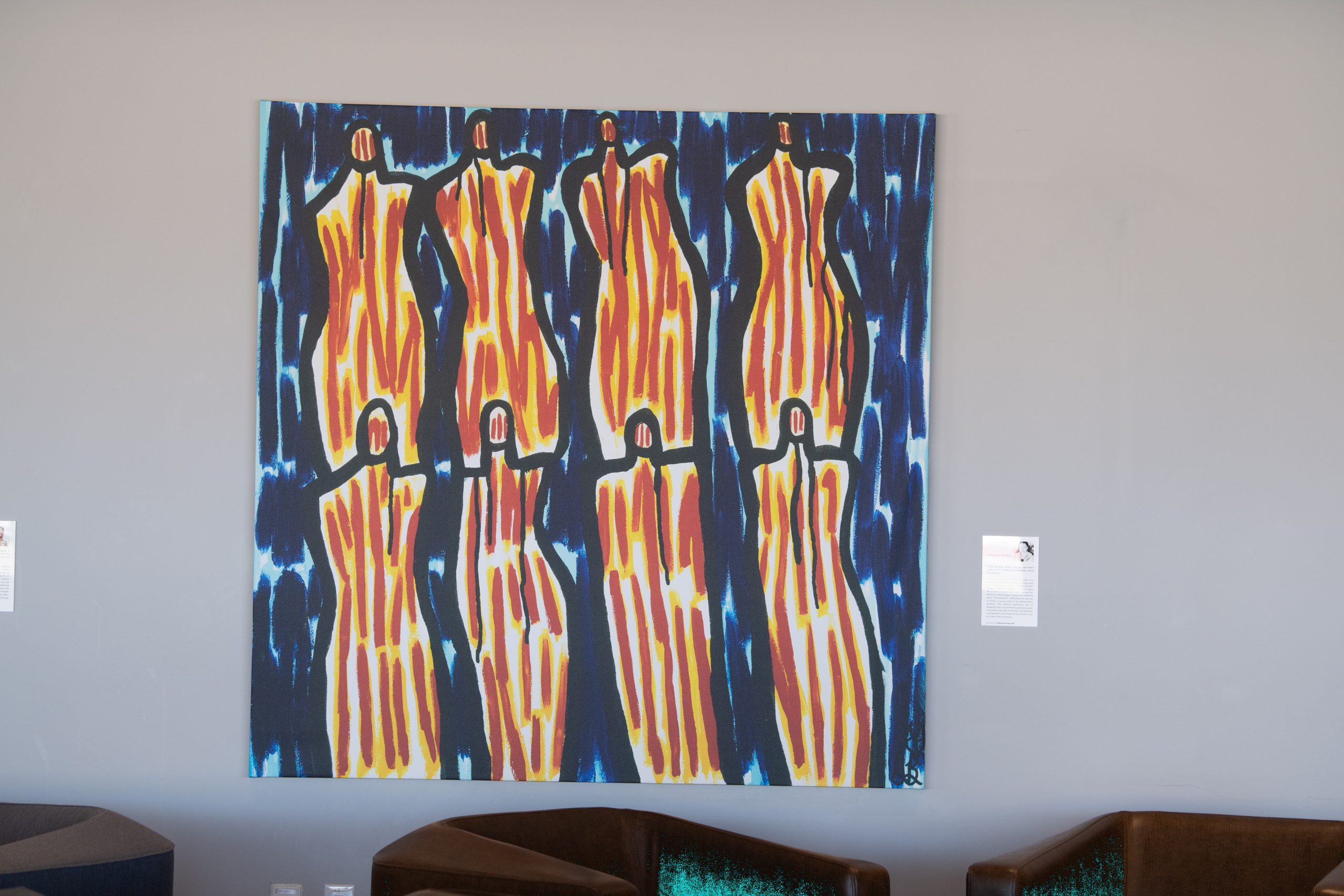
Higher Self by Sierra Barnes

Lines of Communication by Cheryl Kinderknecht

We The People by Yvette
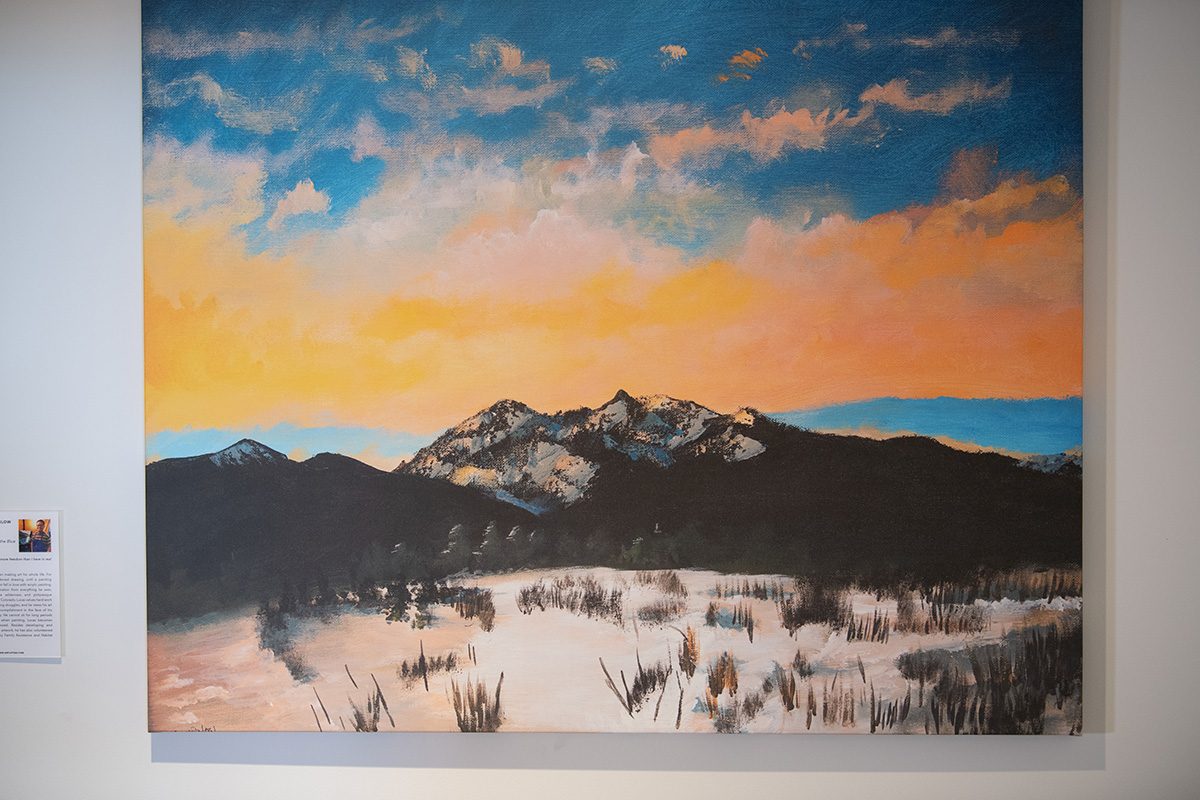
Winter in the Rockies by Lucas Farlow
Historical Photos
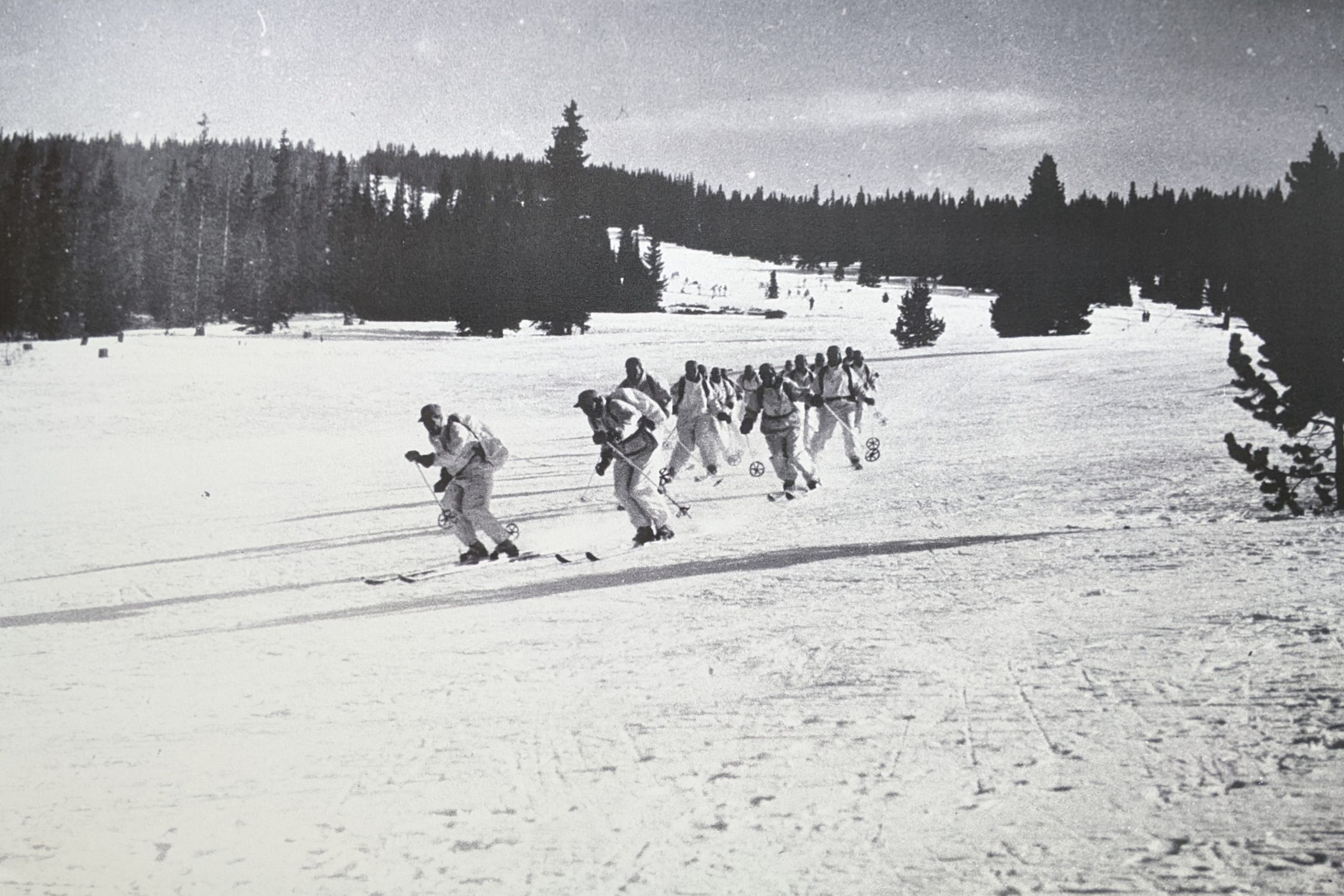
Camp Hale
Eagle County’s current ski resort economy evolved from the World War II-era development of Camp Hale, a U.S. Army training facility constructed in 1942 on Tennessee Pass (between Red Cliff and Leadville). Located at an elevation of 9,200 feet above sea level, the camp was the base for the 10th Mountain Division. In addition to warfare tactics, some 15,000 solders learned mountain climbing, cold weather survival, and Alpine and Nordic skiing. The skills of the elite ski troopers proved pivotal in battles in the rugged mountains of Italy and other countries. When the war ended, several enterprising Camp Hale veterans returned to the area with a vision of recreational ski development. The Vail ski resort opened in December 1962.
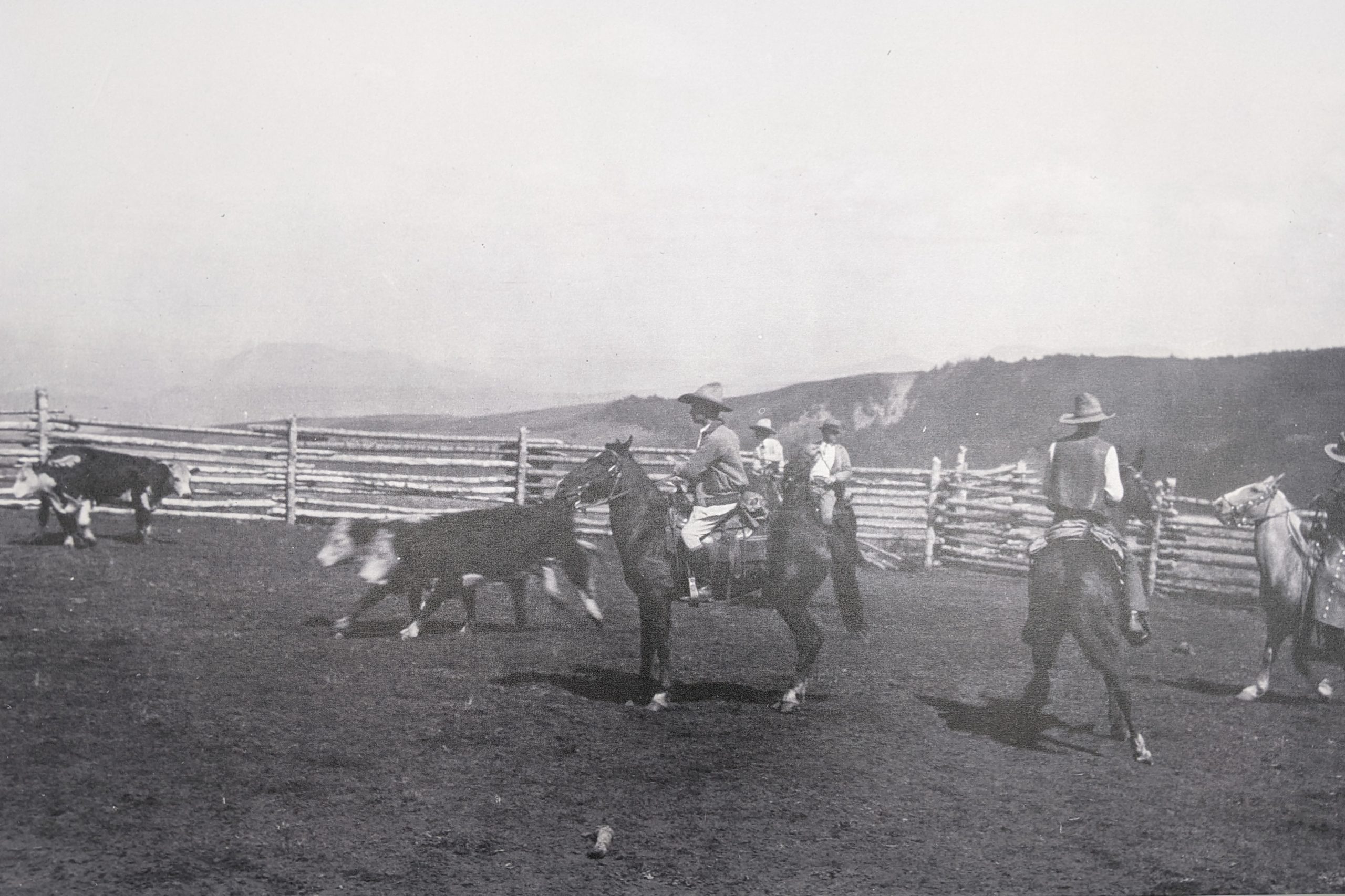
Cowboys and Steers
The first herd of cattle arrived in Eagle County in November of 1880. The cowboys turned the animals loose near Eagle, expecting that wind would blow the snow off the ground so the animals could feed through the winter. The men and the cows quickly learned that November snows in Eagle County tended to linger through spring. Surprisingly, most of the herd survived, and in following years, many fine cattle ranches were established in the county. Ranchers grazed their stock on the lush grasses of high altitude meadows (public land) in the summer. This photo shows cowboys working steers at the Lloyd Ranch east of Eagle in the 1920s. Most of the historic ranches in the county have now developed into communities, ski resorts, and residential subdivisions.
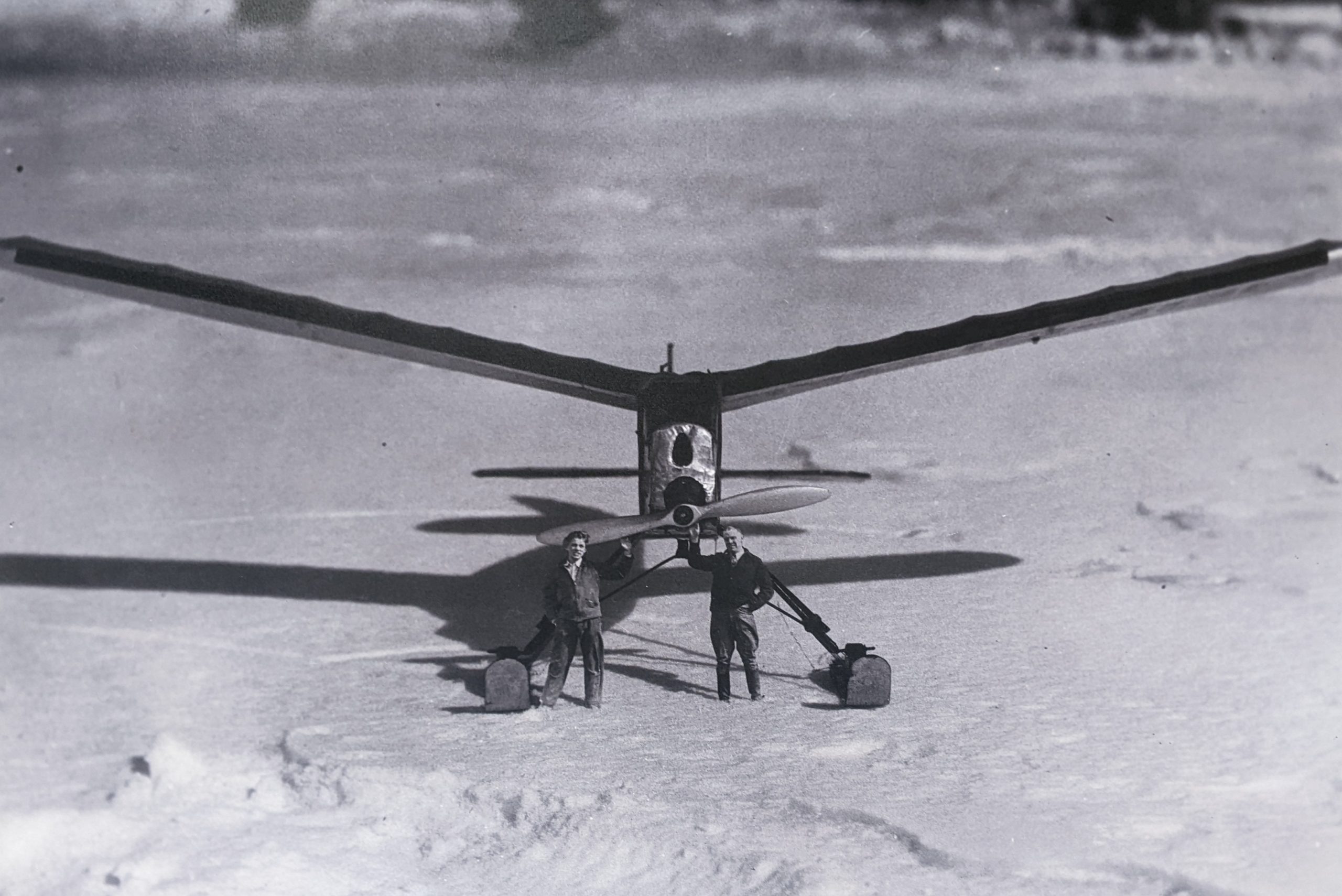
Eagle County Airfield
Eagle businessman Eldon Wilson, a man fascinated by airplanes, was the local visionary who first promoted the concept of a local airfield in the 1930s. Cooley Mesa, a rare stretch of flat land located between Eagle and Gypsum in the mountainous Eagle River Valley, was the logical place for airplanes to take off and land. Wilson talked up the concept with the county commissioners, then recruited a couple of friends, borrowed a county maintainer, and scraped a runway strip out of a sagebrush patch. Locals used the strip for testing large-scale model planes, and adventurous barnstormers in World War I-era biplanes used the airstrip for flight exhibitions. Eventually, the county commissioners purchased the airfield property, and sought federal funding for airport development. The Eagle County Airport was officially dedicated in September 1947. Pictured are Eldon Wilson and Ralph Belding with their model airplane in 1939.
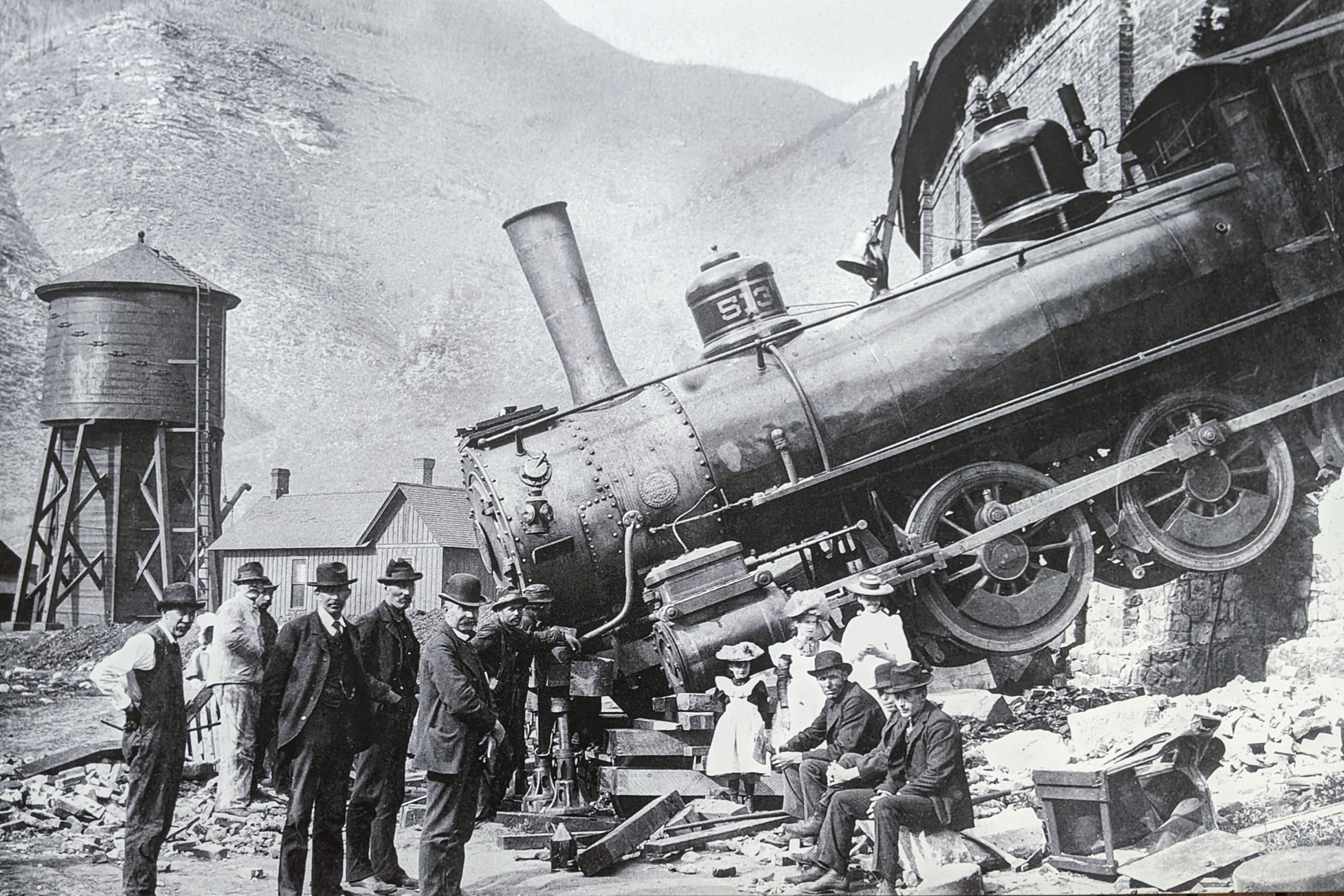
Minturn Train Crash
Minturn, located near the base of Eagle County’s mineral-rich Battle Mountain mining district, got its start as a railroad town. The Denver & Rio Grande Railroad extended tracks through the Eagle Valley in 1887. The railroad route over Tennessee Pass was the steepest stretch of the entire railroad line. Extra ‘helper’ engines were essential to pushing the trains up the grade. Minturn was the logical place for a rail yard and roundhouse where crews maintained the steam engines. The roundhouse crash occurred in 1901. Machinists had repaired and cleaned the engine, then filled the boiler with water in preparation for the next day. A watchman, unaware that the engine was repaired and ready to roll, later built a fire in the engine, then left the building. The engine powered itself up and smashed through the back end of the roundhouse. Minturn citizens made a holiday out of the event, dressing up in their best and posing for a photograph.
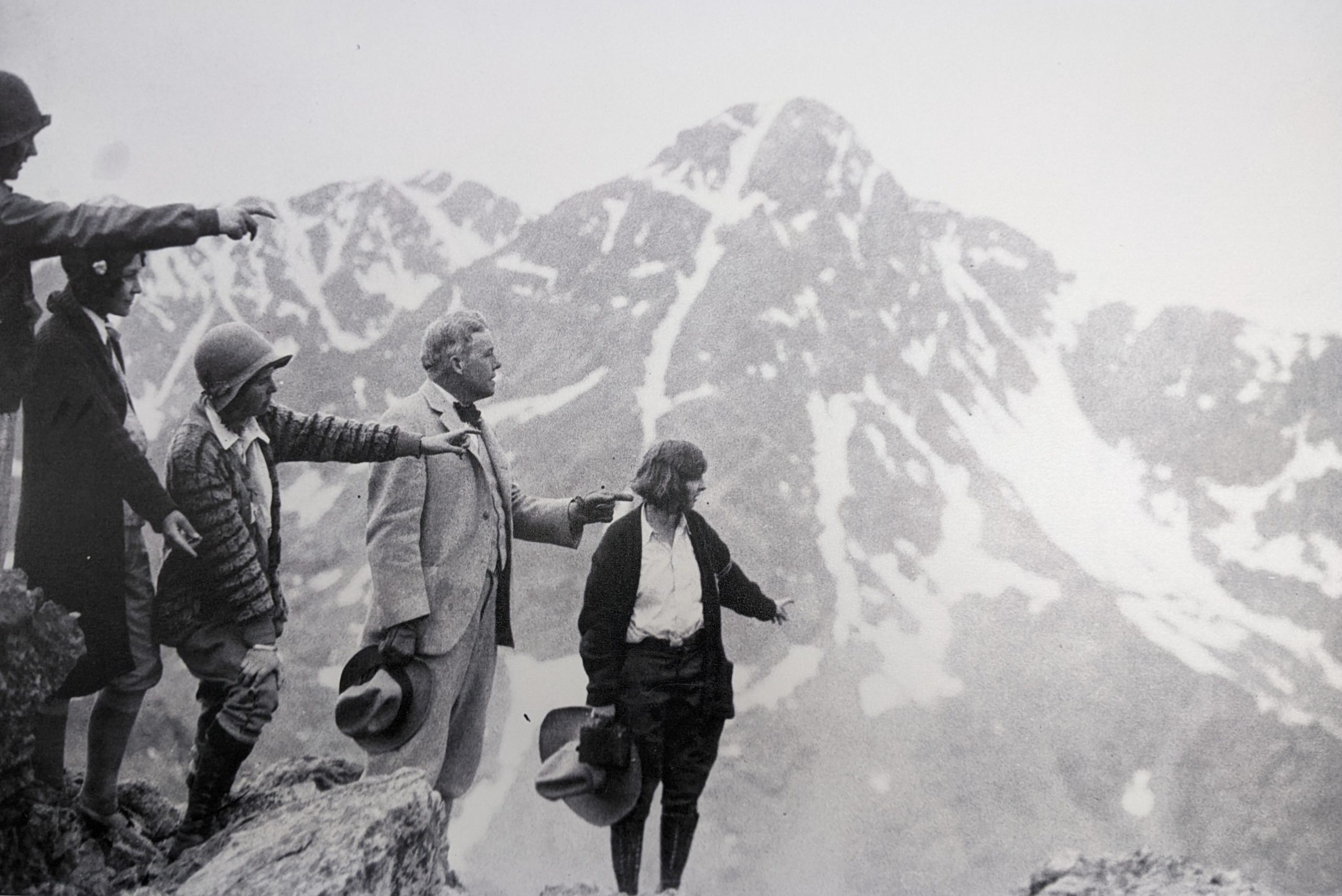
Mount Holy Cross
Located in the Sawatch Mountain Range, the Mount of the Holy Cross (elevation 14,005 feet) is Eagle County’s most distinctive natural landmark. Stories of a mountain with a giant “cross of snow” filtered down from the Utes and the mountain men in the early 1800s. In 1873, photographer William Henry Jackson captured an image of the mountain while participating in the Hayden Expedition. The mountain has served as both a religious icon and an artistic inspiration since that time. In the 1920s and 1930s, hundreds of people participated in pilgrimage hikes to view the natural cross. The formal pilgrimages were halted in 1939 due to World War II. The hike up Notch Mountain to view the Mount of the Holy Cross remains popular today. (Mount of the Holy Cross is in the middle of the photo.)
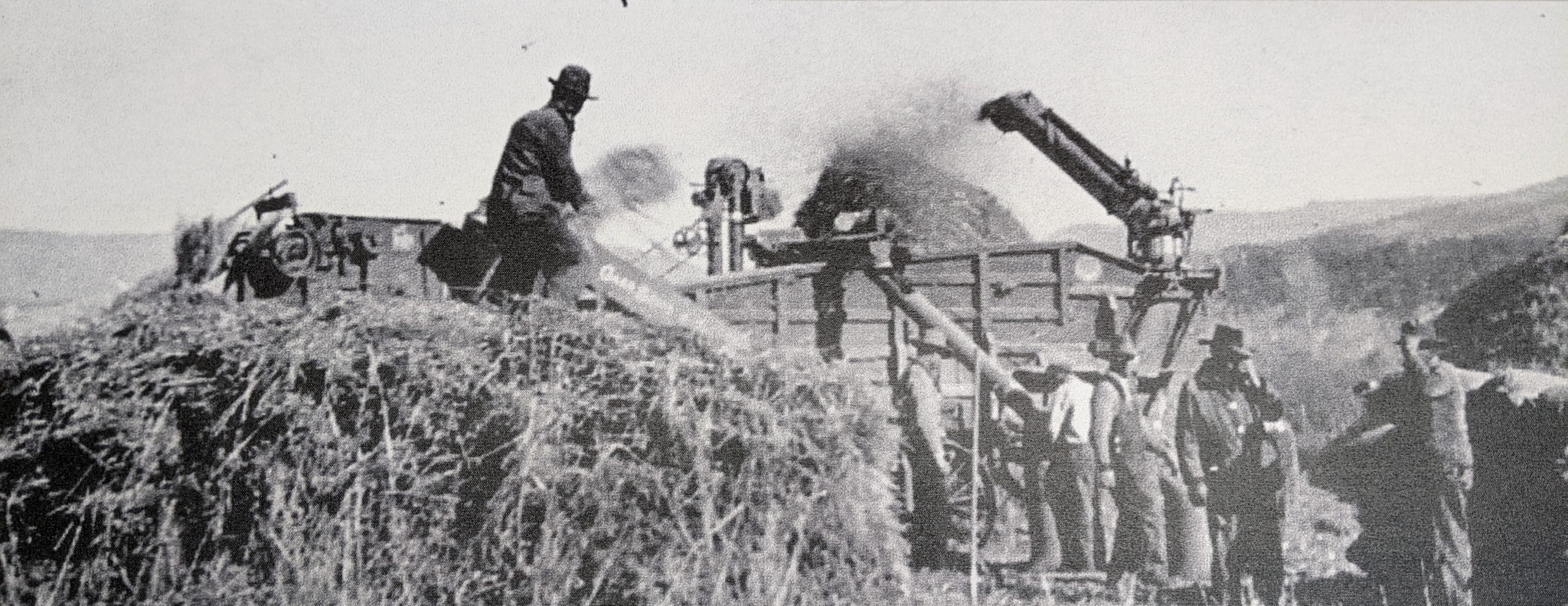
Threshing Crew at Borah Ranch
Pioneers were originally drawn to Eagle County by the lure of silver and gold mines. However, many of those miners quickly recognized another type of riches in the mountain valleys and meadows that featured fertile topsoil and abundant water. From the 1890s through the 1960s, agriculture was a driving economic force in the county. Farmers raised potatoes, head lettuce, wheat, oats, and hay. In the fall, threshing crews, like this group photographed on a Brush Creek ranch (south of Eagle) in 1912, took their steam-powered machines around to local farms to harvest the grain crops. Eagle County’s agricultural economy faded after World War II, when small mountain farmers found they could no longer economically compete with large corporate farming operations on the plains.